
“It doesn’t seem possible, but it must be because I am doing it”
24 hours with mother-writer-editor Clare Howdle

Welcome to the sixth edition of On the Clock: a series documenting a day in the lives of working creative women
I’ve been thinking a lot about time.
After reading Andy Weir’s Project Hail Mary something about relativity just clicked like it hadn’t before (I haven’t seen the film, just happened to dive into the book before its release). The main character, Ryland Grace, experiences 4.5 years on his space expedition to Tau Ceti, where on earth they experience 12 years. Time dilation. I can’t understand it without doing the mental equivalent of squinting.
So was Monday to Monday this past week. It sped by in a blink. As if I’d fallen asleep during a movie and woken up at the end. Of course, everyone with little kids will tell you the days go fast, years slow etc etc… but then what of the excruciatingly slow summers of teenagehood waiting for the next big milestone that might unlock your freedom? What of the post-exam months of 2001, where it felt like endless days hanging out in each others’ parents’ living rooms watching each other play Halo? What if time is relative to life stage too?
I, like many other female writers, get asked a lot how I FIND the time, a lot. I always thought this was because I, like all the others, am jigsawing writing projects between paid work and child-raising … but no, it turns out even full-time bestselling author Emma Gannon gets asked this question all the time (many times?) too, which frankly, I find flabbergasting. I love Emma’s analysis of how it might just be entrenched misogyny, which I’ve long thought. Male writers don’t get asked this. She writes (my emphasis):
There’s something revealing in what we assume is “normal” or even admirable in one direction, and slightly suspect in another. The idea of a woman carving out uninterrupted time can still be framed as indulgent, or something that needs explaining, whereas for men it often reads as discipline, seriousness, or even just part of a respected identity. The time itself isn’t the interesting part—it’s the permission we culturally put onto it.
It’s sort of implied that as a woman, shouldn’t you be doing something else, something more useful?? Than finding all this TIME to WRITE?
Like me, Emma is able to see how relative time is to each of us. She goes on:
Most of us? The majority? We do have some time. The elephant in the room is: usually “finding time” means sacrificing something else. It means being honest about your screen-time. It means putting your phone down. It means getting up half an hour earlier. It means saying no to that invite from an acquaintance.
[...] When we really want something (a dog! An hour at the gym! A spicy one night stand! A new TV!) we move heaven and Earth to make it happen. This is why I think “I don’t have time” when it comes to creative work is often a cover-up. It’s a thing we tell ourselves. It’s the first layer of the onion. It’s a way to shrug something off.
Okay, we “don’t have time” but also deep down: we’re also scared to give it a go. “I would, but I don’t have time” can sometimes be a creative excuse. Something else is lurking. Fear, worry, perfectionism, procrastination, people-pleasing, your inner critic. Call it out.
— Emma Gannon, The Hyphen by Emma Gannon
I was once in a writing group with other women which was less about sharing our work, and more for talking about everything surrounding our writing life—the how, and where, and roadblocks to making it to the desk. This kind of support group was far more effective in what we actually needed as women writers. We shared the usual tips about early rises, fixed dates with the project or cowriting accountability. But, ultimately, what I came to see is that for each woman, for each person, a lot of it was about permission. Permission to put writing high on the priority list above all the other clamouring needs everyone else will throw your way. Just like work, time for something will fill whatever container you give it.
This week, I interview to my longtime friend and collaborator, Clare Howdle for On The Clock.
Before I was friends with Clare I admired her from afar. When I first moved to Cornwall, most of our network were other artists, since we moved mainly for the studio my husband was awarded in St Ives. It took me a while to find my ‘people’—who I might roughly group as ‘media folks,’ working in production, storytelling, design and journalism. Looking back, finding other creative people was mostly through being connected to Clare, and her wonderful agency Stranger Collective.
I think Clare and I first met when I went along to a Stranger Collective Firelight event—where three speakers share their stories around a huge burning fire—and was hooked. Clare and her business partner Helen Gilchrist bowled me over as these powerhouse women, running a studio around words, brands, story, which was environmentally connected, a node in a network of amazing creative people, and they both also seemed so lovely, genuine, curious, and interesting. And mind-boggingly smart. Oh and were writing their own books on the side and had families with young kids. They were role models just a few years ahead. And have been so ever since.
Clare and Helen were also part of the previously aforementioned writing support group—so I got to know them more intimately as artists in their own right, and all the vulnerabilities and anxieties about our work that comes with that. I get to see them both up close as humans, as mothers, as friends holding the ropes of many sails, and as business smarts, winning huge clients with their savvy and wisdom.
This is a huge privilege, and I’m so pumped we have Clare sharing the intricacies of her day, her writing routines and approach here today. Not least because I’ve been witness to the years of her hard grind—work which is coming to fruition with the publication of her first solo short story collection, Hirethow, published with Hermitage press this August, as well as her novel-in-progress (repped by Laurie Robertson for PFD).
I’ll be taking the stage with Clare this week for Penzance Literary Festival where we will be talking exactly this topic—Writing through the chaos—at Pixel Penzance, on Thursday 9 July at 11am. So if you’re local please come! I’d love to see you there.
Reading about Clare’s day, and preparing for this workshop, another quote from the Canadian novelist Sheila Heti struck me as apt. Usually, I self-chastise for blending work and the rest of life, trying to stick to vague compartments, the containers. But more recently, I’ve realised if I let writing seep out into everything else, it all just works better together, and the good feeling I get from a session at the desk continues throughout the week. Sheila writes:
“More and more as I get older I want my writing and my life to interweave. I don’t want my books or writing itself to be something separate from what I would do anyway, or to be about something apart from what I am thinking anyway—my writing should be no different from my thoughts going through the day. I don’t know if I have come to this because I can’t seem to separate out a privileged space for writing, in which I imagine other worlds, or if it’s the reverse, but it’s important for writing and life to be fairly seamless; to be the same thing. So that I can come to the computer any time—night or day, for ten minutes or two hours, and begin writing from where I am—from what I am thinking about. I want writing and living to be one thing, so that writing is just me living, but on the page—an extension of the living I was doing before I sat down to write.”
— Sheila Heti, from Daily Rituals, Women at Work by Mason Currey.
There is something of Sheila’s words in Clare’s discipline and schedule here too, which Sheila openly never found. Clare starts the day writing, and sometimes ends it too, sometimes thinks about it elsewhere. Clare finds the time, and doesn’t ask permission. Make note of her name, Clare Howdle. you’ll be seeing plenty more of her in years to come.
Clare, over to you…
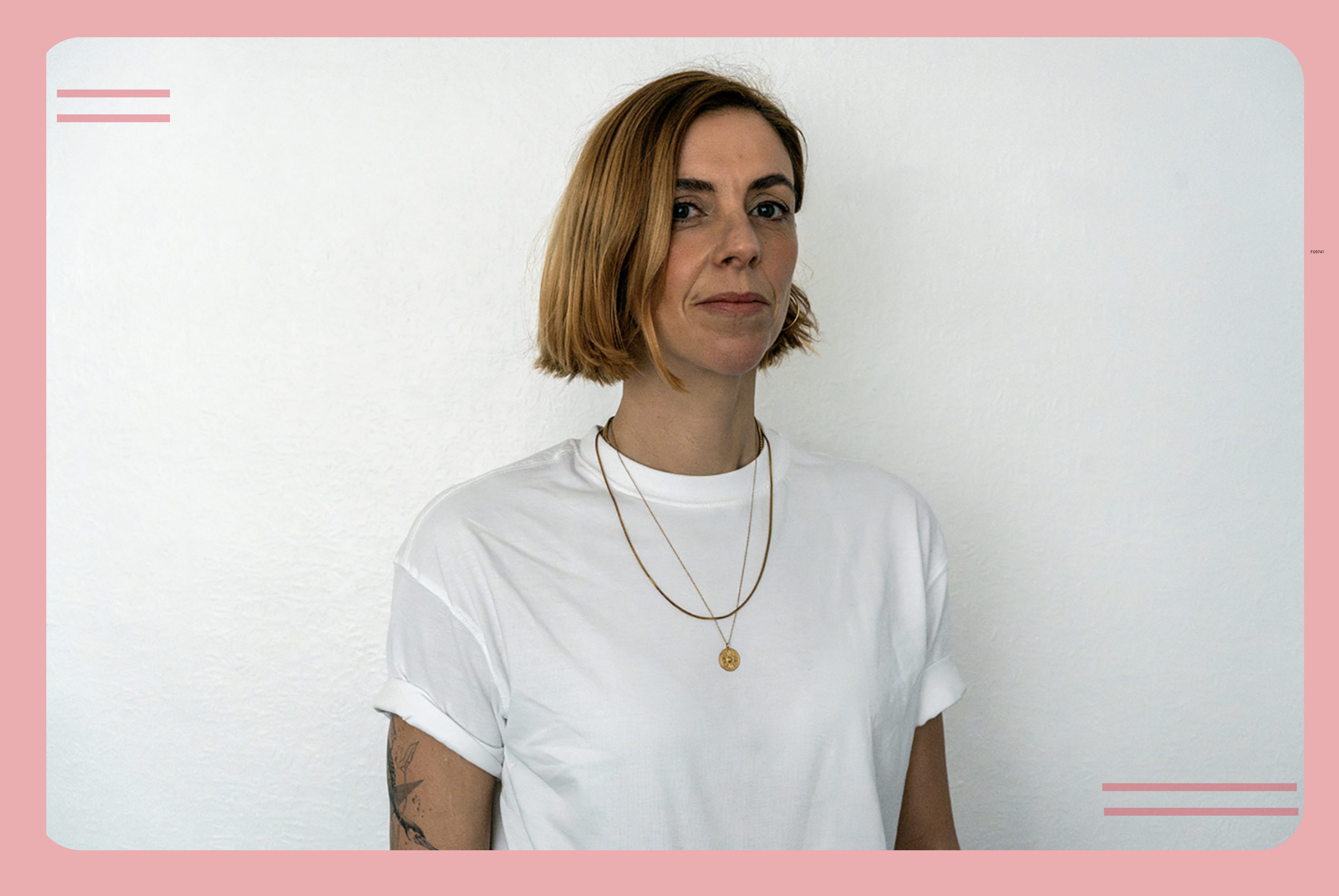
Name: Clare Howdle
Age: 46
Job: Writer, editor, brand strategist (co-creative director and partner at Stranger Collective)
Location: Falmouth, Cornwall
Who’s in your Mother, Inc.? my son, Fox, 10, and husband Zander.
Take us through a typical day?
My typical schedule is challenging to define as every day brings something different with it—but then I suppose that’s the typical! There is always a need to flex and move plans, relinquish writing time for other demands and readjust expectations of what gets done, when. I’ve become a master at switching hats very quickly and clawing out hours (even minutes!) wherever I can find them!
5.30am: Get up, make tea, get to my desk. I write best early, when the rest of the house is asleep.
7.25am: Wake up my 10-year-old and get him moving for school. While he’s showering I make his packed lunch, sort his PE kit, fill in permission slips or any other school admin needed for the day, put a wash on, make breakfast.
8.25am: Walk to school for drop-off, then exercise. Usually a run, or reformer Pilates both of which work wonders for my brain.
9.30am: After a super quick shower, I grab coffee and breakfast and rush to my desk. Most days are spent on client work. I do a lot of messaging and tone of voice work as well as shaping brand narratives and devising content campaigns, all of which flexes my creative thinking, problem solving, wordcraft and editing skills.
1ish: Lunch, almost always at my desk. I check in with any fiction-adjacent projects on the go, which could be workshops I’m planning, talks I’m hosting or taking part in, or promo. I’m also trying to get better at taking at least 10 minutes out—to walk to the river or bike to the beach. Oh, and hanging out the laundry, if I remember.
4pm: My son arrives home, so I step away to catch up with him about his day.
6.30pm: Work mostly done, we hang out as a family. Board games, a film if it’s raining, sea swims or garden time if it’s hot. Dinner (my husband and I take turns cooking), chat. It’s so tempting to try and slope off and write when I’m on deadline, and sometimes I do, but equally I know how important this time to connect is, so I try and stay present for it, as much as I can.
9pm: Bedtime for the boy, then, if I have the energy it’s back to the desk again to write. If I’m not feeling it, or want a break, we watch TV. I’m a huge admirer of the brilliant writing of prestige shows like Succession, The Bear and Beef.
11.30ish: Write a To Do list for tomorrow (I couldn’t live without lists) with everything jumbled up—school admin to remember, shopping, emails to send, a plot point to iron out. It isn’t really usable in that form and I know I’ll rewrite it in the morning but unless I get it out of my brain I struggle to sleep. Then, bed.
Reading it laid out like this it’s crazy to see how completely packed every day is. It doesn’t seem possible. But although there is some flex here and there and I’ve managed to set Fridays aside purely for fiction writing so that day looks very different, this is genuinely my schedule. So it is possible because I am doing it. And I know I’m not the only one. Squeezing every second I can out of the day, filling every gap, making time, spinning plates, trying to find balance of some kind wherever and however I can. Sometimes it feels too much, most of the time I like the pace and there isn’t a part of it that I can sacrifice. It’s all important to me. Although finding a way to get a little more sleep would be nice—but if I did, I’d probably just fill it with something else that needs doing.
it’s crazy to see how completely packed every day is. It doesn’t seem possible. This is genuinely my schedule. So it is possible because I am doing it.
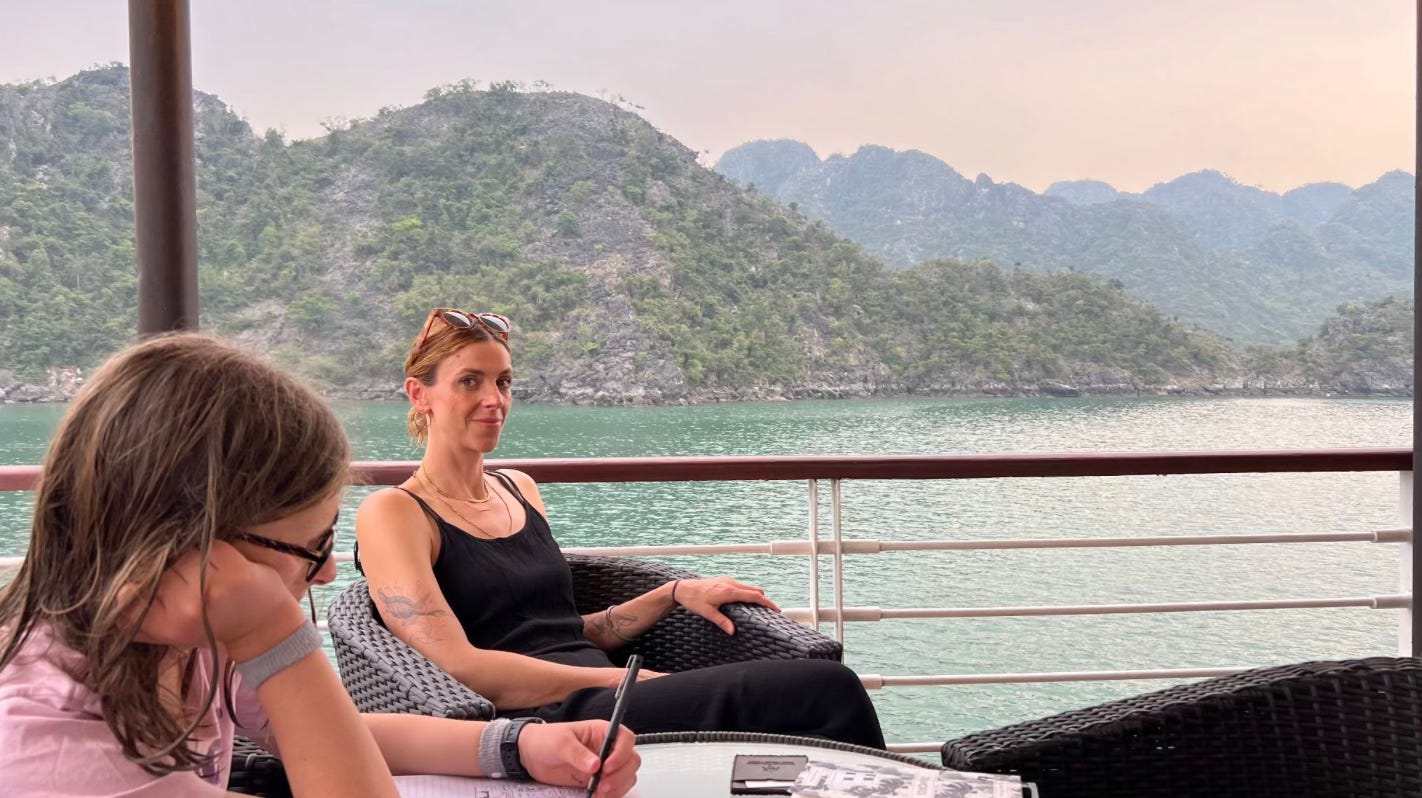
Follow Clare Howdle here on Substack, or on Instagram @clarehowdle or check out her work on Stranger Collective.

On the Clock is a new series documenting 24 hours in the lives of working creative women. A huge thanks to all the mothers who’ve taken part so far. Share this post with someone who needs it <3
Tell Their Stories is a reader-supported newsletter. Paid subscribers gain access to the archive of Tell Their Stories for posts older than six weeks. Consider passing this post onto a mother-friend who might need it, and upgrading to support more voices and stories to come.
Loved this. I'm still in my toddler era but I'm so looking forward to the possibility of (one day!) getting up before the rest of the house is awake.
The time question is a funny one. As a book editor I'm aware that I'm often pressuring authors to find the time, to meet this (usually made up deadline) but I think there's also something about recognising the different kinds of time that the phases of a project require. I've found that book-length projects can cope with snatches of time here and there for a while, but there comes an inevitable stage whereby the writer needs some 'deep time' with the page. That's the time that's so hard to come by for most parents, I think.
What a wonderful series — I look forward to reading more. And thank you for the Daily Rituals shout-out!